
Peh Atta JosephSoftware engineering & computer science research

Hi, I’m Peh Joseph.

I’m a software engineer, product designer, and founder based in Ghana. I build web software and interactive learning tools, and lead technical projects through Scrum, from sprint planning and stakeholder coordination to product delivery.

I’m also an MPhil Computer Science researcher at the University of Energy and Natural Resources, where I study how edge AI hardware can catch errors in its own calculations.

Portrait of Peh Atta Joseph

Featured project

Pehxel

Founder & Technical Engineering Manager

I founded Pehxel and led engineering and product delivery for virtual classrooms and real-time collaboration.

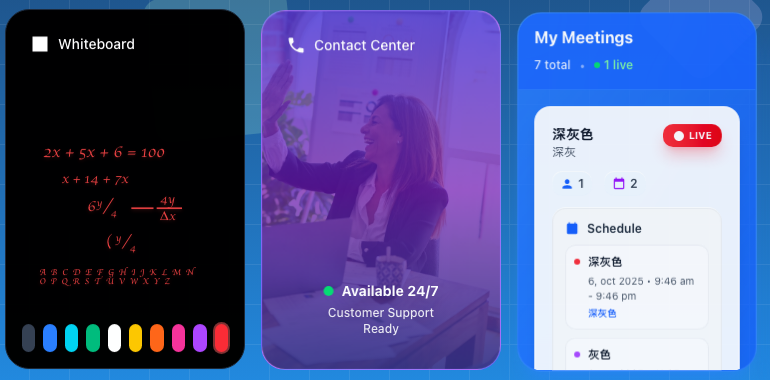
I coordinated delivery of live video, shared whiteboards, breakout sessions, annotation, and recording within one classroom workflow. Educators can move from a live explanation to group work, while learners can mark up the same board with a stylus.

Visit Pehxel.com

Pehxel’s public product preview showing a shared whiteboard, support panel, and meeting scheduler.
Pehxel’s product preview shows the shared whiteboard and meeting tools that support live lessons.

Research

MPhil Computer Science · Ongoing research

Self-Checking RRNS for Quantized Fixed-Point Convolution Layers in Edge AI Hardware Accelerators

Can an edge AI chip detect when a calculation has gone wrong? I’m studying this question in convolution layers, where a model performs many small calculations to process its inputs.

A redundant residue number system (RRNS) represents a number by the remainders it leaves when divided by several fixed values. Extra remainders give the hardware a way to check the result: if the extra remainders are inconsistent with the result, it can flag a possible error. I use Python to model the arithmetic and inject faults, and Verilog to evaluate a hardware implementation.

System A results: In software fault injection tests, the checker detected all 480 single-channel faults and 695 of 720 two-channel faults. It used five check bits alongside 15 data bits, a 33% increase in residue width.

View the research experiments

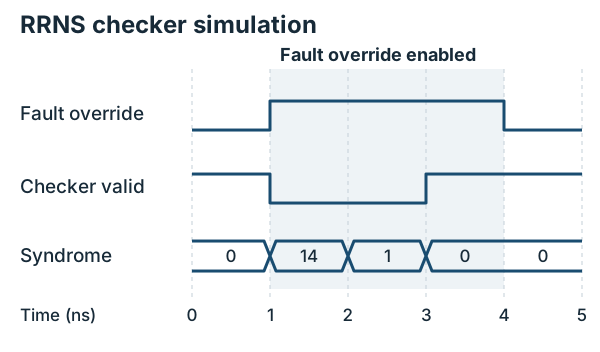
System A simulation from 0 to 5 nanoseconds. At 1 nanosecond the fault override turns on, checker valid drops from 1 to 0, and the syndrome rises from 0 to 14. At 3 nanoseconds checker valid returns to 1 and the syndrome returns to 0.
The RRNS checker flags an injected fault in Verilog simulation.
Read waveform values
  • 0 ns: Fault override off, checker valid, syndrome 0.
  • 1 ns: Fault override on, checker invalid, syndrome 14.
  • 2 ns: Fault override on, checker invalid, syndrome 1.
  • 3 ns: Fault override on, checker valid, syndrome 0.
  • 4–5 ns: Fault override off, checker valid, syndrome 0.

Cancer Classification from Gene Expression Data

This study analyzed gene expression profiles to classify tumor samples into five cancer types. It compared logistic regression, a support vector machine, and a random forest on a public RNA sequencing dataset.

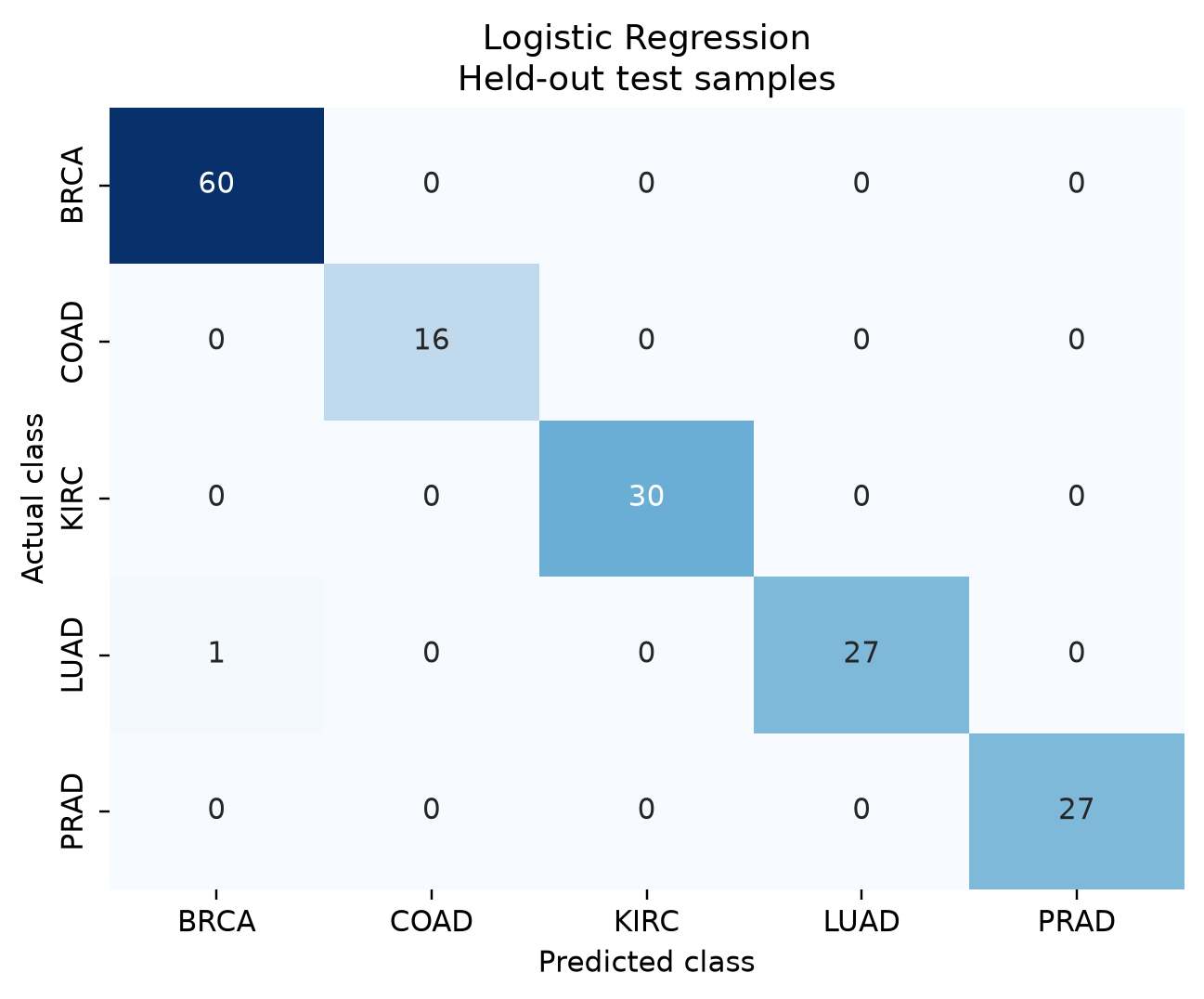
Feature selection was fitted separately within each training fold. On the held-out benchmark, logistic regression correctly classified 160 of 161 samples.

View the experiment notebook

Confusion matrix showing 160 correct predictions and one lung tumor sample classified as breast cancer.
Logistic regression results on the held-out test set.
Read classification results by cancer type
  • Breast invasive carcinoma: 60 of 60 correct.
  • Colon adenocarcinoma: 16 of 16 correct.
  • Kidney renal clear cell carcinoma: 30 of 30 correct.
  • Lung adenocarcinoma: 27 of 28 correct. One sample was classified as breast invasive carcinoma.
  • Prostate adenocarcinoma: 27 of 27 correct.

Experience

Scrum Master / Frontend Engineer

  • Facilitate sprint planning, daily stand-ups, reviews, and retrospectives. Track backlog progress and team velocity, document decisions, and follow up on blockers and improvement actions.
  • Coordinate developers and stakeholders to turn business requirements into sprint priorities. Lead frontend delivery for ICON, contribute to an internal ERP system with a 10-member team, and partner with two backend engineers on a data migration service.

Scrum · Vue · TypeScript · React

Founder / Technical Engineering Manager

  • Led engineering direction and product delivery for virtual classrooms and real-time collaboration. Translated educator needs into requirements for live lessons, digital whiteboards, and video feeds.
  • Coordinated delivery across five workflows: whiteboards, video conferencing, breakout sessions, annotation, and session recording. Directed delivery of AI-enabled notes, quizzes, and attendance and participation reporting.

Senior Frontend Engineer

  • Coordinated planning and issue tracking across a 30-developer team using Jira and Miro. Wrote onboarding and training documentation for engineers and customers.
  • Supported payment SDK integrations across React, Vue, Angular, and HTML. Promoted code quality standards and contributed to CI/CD workflows for releases.

Jira · Miro · React · Vue · Angular

Senior Frontend Engineer (Consultant)

  • Translated client requirements into responsive web applications and media administration tools, including workflows that help editorial teams publish articles.
  • Led frontend implementation with Vue and Nuxt, integrated APIs, and improved application responsiveness.

Vue · Nuxt · TypeScript

Senior Frontend Engineer

  • Developed and tested features across web and mobile applications. Resolved defects in the Forecastmall app to improve stability.
  • Worked with developers and consultants to research and build Nextgen prototypes, contributing across the frontend and backend.

React · React Native · Node.js · MongoDB

Education & interests

MPhil Computer Science researcher

My research focuses on dependable edge AI. I’m also interested in how interactive tools can help learners understand and practise STEM concepts.

BSc Computer Science

Get in touch

I’m interested in doctoral research, engineering roles, and collaborations in dependable computing and interactive learning.